The best invoice factoring company depends on what you invoice. Carriers should quote RTS Financial, Triumph, OTR Solutions and eCapital. Staffing firms and startups fit Bankers Factoring and altLINE. Occasional invoices fit FundThrough. None of the eight publishes a full price, so compare written quotes by effective APR.
Which invoice factoring companies are worth a quote?
Eight companies, with each one's terms as published on October 29, 2026. Seven of them publish at least one hard number: an advance rate, a fee, or a minimum. None publishes what you'd actually compare, which is the all-in price on your invoices to your customers. A cell that says Not published means the page didn't say.
| Company | Advance rate stated | Fee or rate stated | Recourse | Contract and minimums | Industries named |
|---|---|---|---|---|---|
| Bankers Factoring | 80% to 93% | Discount rates of .9% to 1.9%; no application fee | Non-recourse | Credit lines of $25,000 to $6,000,000; contract length not published | Trucking, staffing and payroll, oil and gas |
| altLINE (The Southern Bank Company) | 80% to 90% within 24 hours | Typically 1% to 5%, varying with customer credit, volume and invoice age | Not stated | No minimum credit requirement; contract terms not published | Staffing, trucking, oil and gas, janitorial, wholesale, manufacturing and others |
| RTS Financial | More than 90% within 24 hours | "A small fee"; its rate calculator gives an estimate only | Not stated | Contracts required; terms not published | Trucking |
| Triumph | Not published | Not published | Non-recourse contracts available | No minimums, no reserves | Freight carriers and brokers |
| OTR Solutions | Up to 50% of linehaul before delivery; final advance not published | Not published; up to 0.5% off when bundled with its fuel card | Both; "True Non-Recourse" option | No monthly volume minimums | Trucking |
| Bay View Funding | Offers usually 70% to 90% | Rates "as low as 0.5%," subject to change | Not stated | Funding up to $15 million | Trucking, staffing, manufacturing, wholesale and distribution, oil and gas |
| eCapital | As high as 100% depending on terms; up to 98% within 24 hours in freight | Fees from 1% to 5% or more | Recourse or non-recourse (freight page) | Not published | Transportation, staffing, manufacturing, wholesale |
| FundThrough | 100% of invoice value, less one flat fee | One flat fee; amount not published | Not stated | No long-term contracts or cancellation fees; no required minimum after first funding | Freight, hospitality, medical, professional services, technology, wholesale and manufacturing, government |
As published by each company, October 29, 2026. These are marketing claims, not offers; underwriting sets the real terms.
Read the gaps before the numbers. Four of the eight print a figure for price: Bankers Factoring (.9% to 1.9%), Bay View ("as low as 0.5%," with an asterisk that reads "rates subject to change"), eCapital (fees from 1% to 5% or more) and altLINE (typically 1% to 5%, as a general band for factoring). Each is a headline range, not a quote. The rest leave the price for the sales call. That's normal. It's also why a table of advertised rates can't crown a winner, and why the pick below comes from fit.

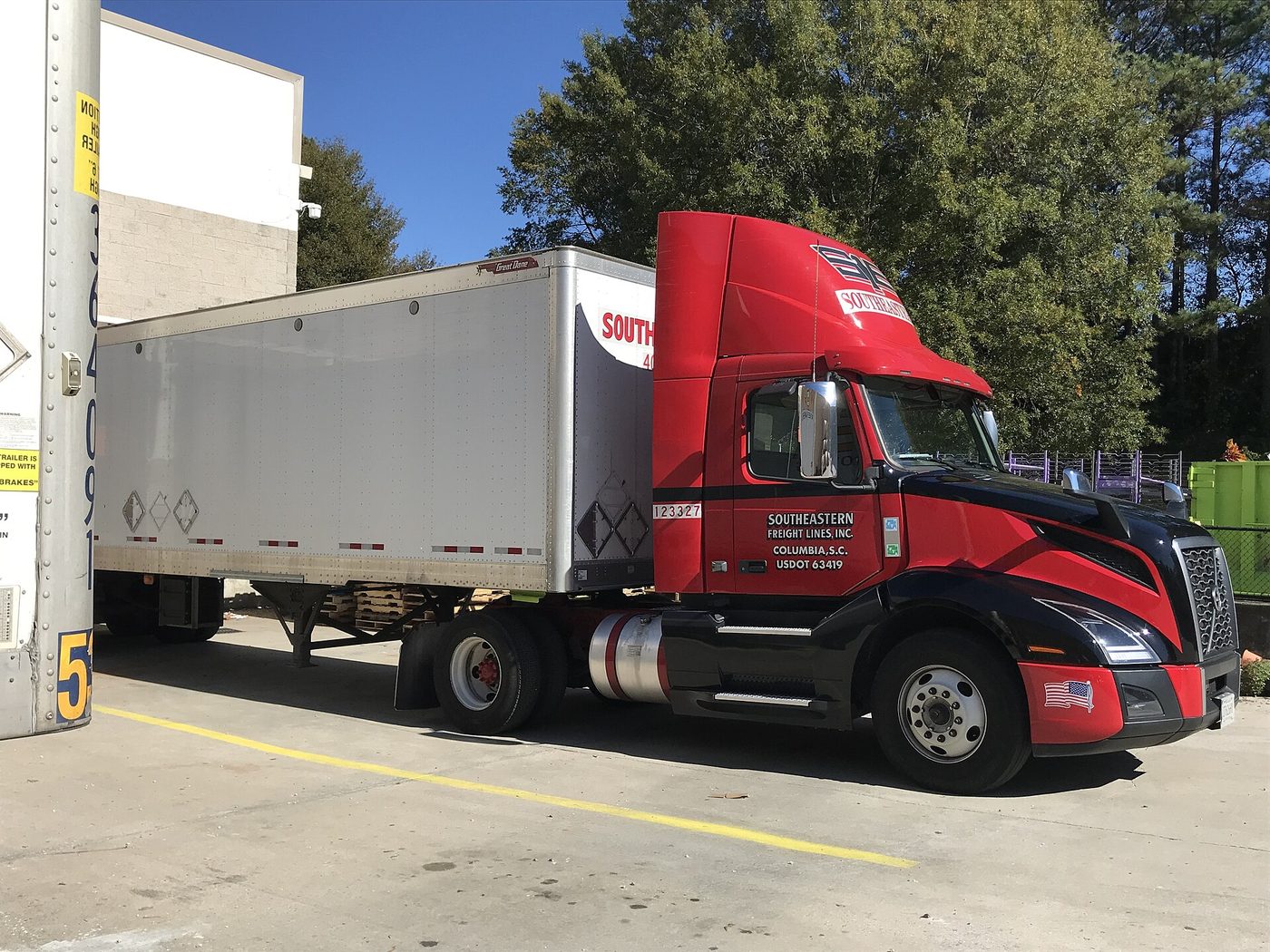
Which factoring company is best for trucking?
Four of the eight run carrier-specific programs, and they differ less on what they advertise than on what they protect you from.
RTS Financial says it advances more than 90 percent of an invoice within 24 hours and sends the rest, minus a small fee, once the customer pays. Its freight page promises "zero hidden fees," and its own rate calculator is labeled an estimate: final rates depend on underwriting and on completion of required contracts. Triumph offers non-recourse contracts that cover approved brokers who go bankrupt, with no charge-backs, plus no minimums and no reserves. OTR Solutions sells recourse and non-recourse programs, and says its "True Non-Recourse" option extends past broker insolvency to qualifying non-payment even if the broker is still in business. It has no monthly volume minimums, though once you factor one broker's invoice, later invoices from that broker must be factored until OTR releases you. It will advance up to 50% of the linehaul before delivery, and takes up to 0.5% off the rate if you bundle its fuel card. eCapital's freight page covers everyone from solo haulers to multi-truck fleets and brokers, offers recourse or non-recourse programs, and says it advances up to 98% within 24 hours, with a fuel program that comes with pre-approved credit.
For a carrier, the question that matters more than the rate is what the factor does when a broker doesn't pay. RTS's own example is a customer with 30 days to pay while you need diesel tomorrow. The loss a carrier fears is the invoice that never gets paid at all. A single-truck operator with a handful of brokers should start with a no-minimum, non-recourse program, which means Triumph or OTR, and get the exact trigger for coverage in writing. RTS suits a carrier who wants same-day, app-based funding and a stated advance above 90%. eCapital states the highest advance among the carrier options here, up to 98% within 24 hours, and gives you the choice of recourse or non-recourse. Rates by lane and customer are on our freight factoring rates page, and the recourse question gets its own treatment in recourse vs. non-recourse factoring.
Which is best for staffing firms and startups?
A new staffing agency's problem is payroll week, not the rate. Bankers Factoring is built around that: non-recourse factoring, an 80% to 93% advance, credit lines from $25,000 to $6,000,000 and no application fee. It says it funds true startups and owners with credit scores under 625, and notes that many factoring companies require 6 to 24 months in business before they'll start. For staffing it also describes a same-day payroll funding option by wire. altLINE, a division of The Southern Bank Company, is the bank-backed alternative to quote against it. It advances 80% to 90% within 24 hours, says it has no minimum credit requirement, and lists startups under 12 months in operation and staffing among the businesses it serves.
Don't read ".9%" as the price of your first invoice. Bankers' page doesn't say what period that rate covers, which is the first question to ask. Get both companies' quotes in writing for the same invoice and compare the annualized cost, not the headline.
What about occasional invoices and other industries?
FundThrough is the least committal. It says it pays 100% of the invoice value up front, less one flat fee; opening an account is free, you pay only when you fund an invoice, and there are no long-term contracts, no cancellation fees and no required minimum funding after your first invoice. That suits a business that sells to a few large or government customers on slow terms and needs cash now and then, not every week. The fee amount isn't published, so the quote decides it. Factoring also eats into the margin you built into your price, so check that margin with the freelance rate calculator before assuming a flat 2% is affordable.
Bay View Funding advertises rates as low as 0.5% (with the asterisk) and funding up to $15 million. Its FAQ says offers are usually between 70% and 90% of the invoice and that price turns on sales volume, invoice size, receivables turnover and your customers' credit. eCapital's invoice factoring page is aimed at small and medium-sized businesses with long payment terms, naming transportation, staffing, manufacturing and wholesale. It says the advance can be as high as 100% of the invoice depending on the terms agreed, and that its fees can run from 1% to 5% or more. For wholesale and manufacturing invoices, quote eCapital and Bay View side by side; both name those industries.
What do the stated rates mean as an APR?
A rate quoted per invoice isn't an annual number. The conversion is the same one used on our invoice factoring cost page: effective APR equals the fee divided by the invoice amount, times 365 divided by the days outstanding. Here's what the figures in the table become if the fee is charged once and the customer pays on day 30, 45 or 60.
| Stated fee | Paid in 30 days | Paid in 45 days | Paid in 60 days |
|---|---|---|---|
| 0.5% (Bay View, "as low as") | ~6.1% | ~4.1% | ~3.0% |
| 0.9% (Bankers, low end) | ~11.0% | ~7.3% | ~5.5% |
| 1.9% (Bankers, high end) | ~23.1% | ~15.4% | ~11.6% |
| 5% (top of the 1% to 5% band) | ~60.8% | ~40.6% | ~30.4% |
Annualized with the formula above. Assumes one flat fee and no other charges; tiered pricing and the fee schedule push the real number up. A model, not a quote.
The spread is the point. A 0.5% fee at 30 days annualizes to about 6%, and a 5% fee at the same speed annualizes to about 61%. The same flat fee also looks worse the faster your customer pays, because you're paying for fewer days. So a company with a low headline rate and a stack of per-transfer, monitoring and termination fees can cost more than one with a higher rate and a clean schedule. Only the written quote tells you which you're looking at.
What should you ask before you sign?
Put the same invoice in front of at least three of these companies, say $50,000 on net 45, and ask each for the same things in writing:
- The discount rate structure: flat or tiered, the period it covers, and the exact tier breakpoints.
- The advance and the reserve: what share you get now, what's held back, and when the reserve is released.
- The full fee schedule: application, ACH and wire, monitoring, minimum-volume and early-termination charges.
- What recourse means in practice: which events trigger a charge-back, how long the factor waits, and whether a broker's non-payment while still in business counts.
- Minimums and release rules: any monthly volume minimum, and whether factoring one customer's invoice commits you to factoring all of them.
- Contract length and renewal: the term, the auto-renew clause and the notice you must give to leave.

The three quotes will disagree by more than the advertised rates suggest, and that disagreement, not any ranking on this page, is what tells you which company to sign with.
Invoice Tracker
Every outstanding invoice with its due date, an ageing column that counts from today, and colour alerts at 30 and 60 days. The client summary shows who actually pays late, which is the number that decides whether factoring is worth it. Excel and Google Sheets.
The Money Memo
New articles when we publish. Unsubscribe anytime.
Sources
- Bankers Factoring home page: non-recourse factoring, advance rates, discount rates, credit lines, Bankers Factoring (verified October 2026)
- Invoice Factoring, altLINE (The Southern Bank Company) (verified October 2026)
- Freight Factoring, RTS Financial (verified October 2026)
- Freight Factoring Services for Carriers, Triumph (verified October 2026)
- Frequently Asked Questions, OTR Solutions (verified October 2026)
- Invoice Factoring FAQ, Bay View Funding (verified October 2026)
- Invoice Factoring, eCapital (verified October 2026)
- Freight Factoring, eCapital (verified October 2026)
- Invoice factoring home page, FundThrough (verified October 2026)
- How It Works, FundThrough (verified October 2026)
Image credits
Hand filling out a company invoice on a clipboard: Kindel Media / Pexels (Pexels License)
Hands holding a calculator beside a company invoice: Kindel Media / Pexels (Pexels License)
Freight carrier tractor-trailer at a loading dock: Indy beetle / Wikimedia Commons (CC0)
Photography studio invoice, June 10, 1863: National Portrait Gallery, Smithsonian Institution / Smithsonian Open Access (CC0)
Two people comparing papers at laptops: helloquence / Wikimedia Commons (CC0)